
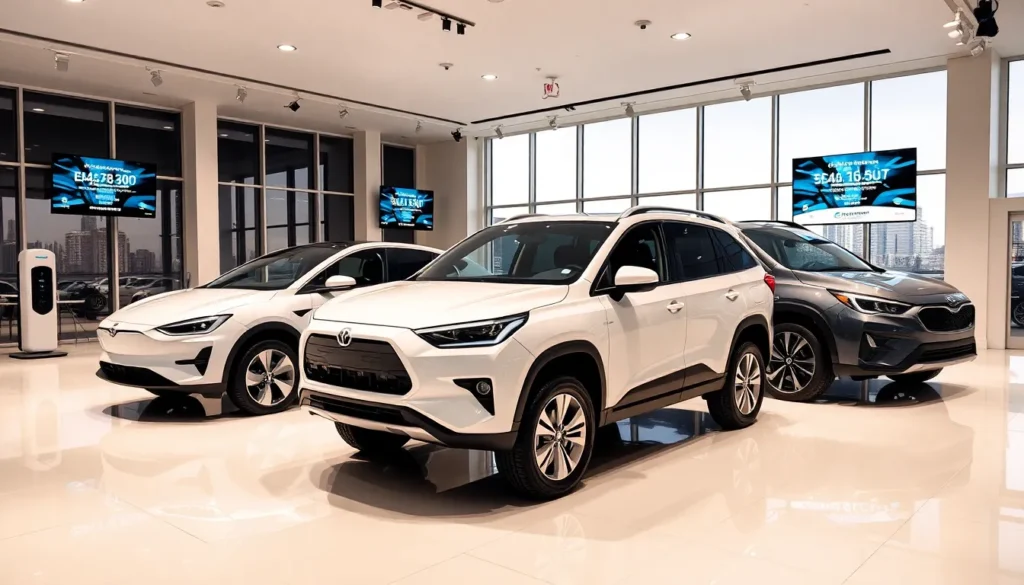
Electric vehicles examples range from compact city cars to full-size pickup trucks. The EV market has expanded significantly, giving buyers more choices than ever before. Whether someone wants a daily commuter or a family hauler, there’s an electric option available.
This guide breaks down the main types of electric vehicles, highlights popular models, and offers practical advice for choosing the right one. By the end, readers will have a clear picture of what’s available and what might fit their needs best.
Table of Contents
ToggleKey Takeaways
- Electric vehicles examples range from compact cars like the Chevrolet Bolt EV to full-size trucks like the Ford F-150 Lightning, offering options for every lifestyle.
- Battery Electric Vehicles (BEVs) have fewer moving parts than gas cars, resulting in lower maintenance costs and zero direct emissions.
- Plug-in hybrids (PHEVs) offer 20-50 miles of electric range and work best for buyers who want EV benefits without fully committing.
- Most modern EVs provide 200-300+ miles of range, which covers daily commutes and errands with ease.
- Federal tax credits of up to $7,500 can significantly reduce EV purchase costs, making electric vehicles more affordable.
- Always test drive an EV before buying to experience the instant torque, regenerative braking, and quiet ride firsthand.
Battery Electric Vehicles (BEVs)
Battery electric vehicles run entirely on electricity. They have no gasoline engine, no tailpipe, and zero direct emissions. A large battery pack powers an electric motor, and drivers recharge the battery by plugging into a charging station or home outlet.
BEVs offer several advantages. They have fewer moving parts than traditional cars, which typically means lower maintenance costs. No oil changes, no transmission fluid, no spark plugs. The driving experience is also different, instant torque makes acceleration smooth and quick.
Some well-known electric vehicles examples in the BEV category include:
- Tesla Model 3 – A popular sedan with up to 358 miles of range
- Chevrolet Bolt EV – An affordable hatchback with 259 miles of range
- Ford Mustang Mach-E – A sporty crossover with up to 312 miles of range
- Hyundai Ioniq 6 – A sleek sedan offering up to 361 miles of range
Range anxiety remains a concern for some buyers. But, most modern BEVs can travel 200-300+ miles on a single charge. For daily commutes and regular errands, this is more than enough. Long road trips require more planning, but the charging network continues to grow.
Plug-In Hybrid Electric Vehicles (PHEVs)
Plug-in hybrid electric vehicles combine a battery-powered electric motor with a traditional gasoline engine. Drivers can travel a limited distance on pure electric power, usually 20 to 50 miles. After that, the gas engine kicks in.
PHEVs work well for people who aren’t ready to go fully electric. They offer the benefits of electric driving for short trips while eliminating range concerns for longer journeys. Think of them as a stepping stone between conventional hybrids and full BEVs.
Popular electric vehicles examples in the PHEV segment include:
- Toyota RAV4 Prime – Up to 42 miles of electric range, 302 combined horsepower
- Jeep Wrangler 4xe – 21 miles of electric range with legendary off-road capability
- BMW X5 xDrive50e – A luxury SUV with 30 miles of electric range
- Chrysler Pacifica Hybrid – A minivan with 32 miles of electric range
One thing to note: PHEVs only deliver their efficiency benefits when owners actually plug them in. If someone never charges the battery, they’re essentially driving a heavy conventional hybrid. Regular charging is essential to get the most out of these vehicles.
Popular Electric Cars on the Market
The electric car market has exploded with options. Here are some of the most popular electric vehicles examples currently available:
Tesla Model Y
The Model Y dominates global EV sales. This compact SUV offers up to 310 miles of range, quick acceleration, and access to Tesla’s Supercharger network. It’s practical, fast, and widely available.
Chevrolet Equinox EV
General Motors launched the Equinox EV as an affordable electric SUV. Starting around $35,000, it brings electric driving to a broader audience. Range tops out at 319 miles on certain trims.
Kia EV6
The EV6 won numerous awards for its design and performance. It charges quickly, 10 to 80 percent in about 18 minutes on a fast charger. Range reaches up to 310 miles.
Rivian R1S
Rivian targets adventure seekers with its R1S SUV. It offers three rows of seating, impressive off-road capability, and over 300 miles of range. The company has carved out a niche for outdoor enthusiasts.
Mercedes-Benz EQS
For luxury buyers, the EQS sets the standard. This flagship sedan delivers up to 350 miles of range, a stunning interior, and cutting-edge technology. It competes directly with the Tesla Model S.
These electric vehicles examples show how diverse the market has become. There’s something for nearly every budget and lifestyle.
Electric Trucks and SUVs
Electric trucks and SUVs represent one of the fastest-growing segments. American buyers love trucks, and automakers have responded with capable electric options.
Ford F-150 Lightning
Ford took its best-selling truck and electrified it. The F-150 Lightning can tow up to 10,000 pounds, offers 320 miles of range with the extended battery, and features a front trunk (frunk) with 400 liters of storage. It also works as a mobile power source, it can power a home during an outage.
Chevrolet Silverado EV
GM’s answer to the Lightning brings serious capability. The Silverado EV offers up to 450 miles of range on the RST trim and 10,000+ pounds of towing capacity. Its Multi-Flex Midgate allows for extended cargo hauling.
Tesla Cybertruck
Tesla’s angular truck polarizes opinions with its stainless steel design. Performance specs impress, 0-60 in under 3 seconds for the top trim, up to 340 miles of range, and 11,000 pounds of towing.
Rivian R1T
The R1T was the first electric pickup to reach customers. It balances work truck capability with off-road adventure features. The gear tunnel, a pass-through storage compartment, adds unique functionality.
These electric vehicles examples prove that EVs can handle serious work. Towing, hauling, and off-roading are all possible without a drop of gasoline.
How to Choose the Right Electric Vehicle
Choosing an electric vehicle depends on several factors. Here’s what buyers should consider:
Daily Driving Distance
Most Americans drive fewer than 40 miles per day. Almost any modern EV handles this easily. But people who regularly drive 100+ miles should prioritize range or consider a PHEV.
Charging Access
Home charging makes EV ownership convenient. A standard 120-volt outlet works but charges slowly. A 240-volt Level 2 charger fills most batteries overnight. Apartment dwellers should check for workplace or public charging options nearby.
Budget
Electric vehicles examples span a wide price range. The Chevrolet Equinox EV starts around $35,000. A fully loaded Tesla Model S Plaid exceeds $100,000. Federal tax credits of up to $7,500 can reduce the effective price significantly.
Use Case
A compact car works fine for urban commuting. Families need SUVs with space. People who tow boats or trailers should look at electric trucks. Match the vehicle to actual needs.
Charging Speed
Some EVs charge faster than others. Look at DC fast charging capability if road trips are common. Vehicles with 800-volt architecture (like the Kia EV6) charge exceptionally quickly.
Test Drive
Electric vehicles feel different from gas cars. The instant torque, regenerative braking, and quiet cabin take adjustment. A test drive helps buyers understand what to expect.


