
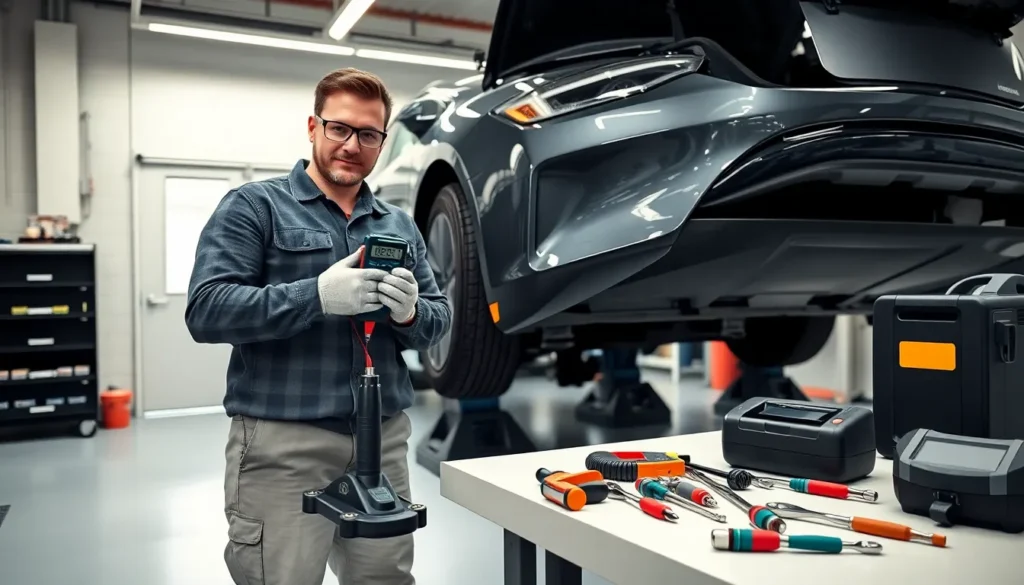
Electric vehicles tools are now a must-have for anyone who owns or works on an EV. These vehicles operate differently than traditional gas-powered cars. They use high-voltage systems, lithium-ion batteries, and specialized components that require specific equipment to maintain safely. Whether someone performs basic upkeep at home or tackles more advanced repairs, having the right tools makes all the difference. This guide covers the essential electric vehicles tools every EV owner should keep in their garage, from safety gear to diagnostic devices and everything in between.
Table of Contents
ToggleKey Takeaways
- Electric vehicles tools must include insulated gloves and wrenches rated for 1,000+ volts to safely work with high-voltage EV systems.
- A CAT III or CAT IV rated multimeter is essential for verifying that power is disconnected before touching any EV component.
- Level 2 home chargers and portable EV chargers are must-have electric vehicles tools for faster, more flexible charging.
- Battery monitoring systems and thermal cameras help detect potential issues early, extending battery lifespan and preventing costly repairs.
- EV-specific OBD-II scanners provide deeper diagnostic access to battery and motor data than standard scanners.
- Heavy-duty floor jacks and jack stands are necessary since most EVs weigh 4,000 to 6,000 pounds due to their battery packs.
Safety Equipment for Working on EVs
Working on electric vehicles demands respect for high-voltage systems. A standard 12V car battery won’t cause serious harm, but EV battery packs can deliver 400 to 800 volts. That’s enough to be fatal. Safety equipment isn’t optional, it’s the foundation of any EV toolkit.
Insulated Gloves and Tools
Insulated gloves rated for 1,000 volts or higher protect against electrical shock. These gloves should meet ASTM D120 or IEC 60903 standards. EV owners should also invest in insulated wrenches, screwdrivers, and pliers. These electric vehicles tools have special coatings that prevent current from traveling through the metal to the user’s hands.
Safety Glasses and Face Shields
Arc flashes can occur during electrical work. Safety glasses with side shields protect against debris, while face shields offer full coverage during battery inspections or repairs.
Fire Extinguishers
Lithium-ion battery fires require Class D or lithium-specific extinguishers. Standard ABC extinguishers won’t work effectively on these fires. Keeping the right extinguisher nearby is a smart precaution for any EV owner who performs their own maintenance.
Voltage Testers
Before touching any high-voltage component, users must verify the system is de-energized. A CAT III or CAT IV rated multimeter confirms that power has been safely disconnected. This simple step prevents accidents and should become a habit for anyone working with electric vehicles tools.
Charging and Battery Maintenance Tools
The battery pack is the heart of any electric vehicle. Proper charging equipment and battery maintenance tools help extend its lifespan and performance.
Level 2 Home Chargers
Most EV owners benefit from installing a Level 2 charger at home. These units use 240-volt outlets and charge vehicles much faster than standard Level 1 chargers. A good Level 2 charger delivers 7 to 19 kW of power, fully charging most EVs overnight.
Portable EV Chargers
Portable chargers offer flexibility for travel or emergencies. Many models work with both Level 1 and Level 2 outlets. They’re essential electric vehicles tools for road trips or backup charging when public stations aren’t available.
Battery Monitoring Systems
These devices track battery health, temperature, and state of charge. Some connect via Bluetooth to smartphone apps, giving owners real-time data about their battery pack. Monitoring systems help identify potential issues before they become expensive problems.
Thermal Cameras
Heat buildup in battery cells can signal trouble. Affordable thermal cameras or thermal imaging attachments for smartphones let EV owners spot hot spots during charging or after driving. This proactive approach helps catch problems early.
Battery Terminal Cleaners
EVs still use 12V auxiliary batteries for accessories and systems. Corrosion on these terminals can cause starting issues. A simple battery terminal cleaner keeps connections clean and reliable.
Diagnostic and Repair Tools
Electric vehicles use sophisticated computer systems to manage everything from motor control to regenerative braking. Diagnostic tools help owners and technicians identify issues quickly.
OBD-II Scanners
Every modern vehicle, including EVs, has an OBD-II port. Scanners read diagnostic trouble codes (DTCs) that reveal what’s wrong. But, not all scanners work well with electric vehicles. EV-specific scanners or apps like Leaf Spy (for Nissan Leaf) or Scan My Tesla provide deeper access to battery and motor data.
Torque Wrenches
Electric vehicles tools must include calibrated torque wrenches. EVs have specific torque requirements for battery connections, motor mounts, and suspension components. Using the wrong torque can damage components or create safety hazards.
Multimeters
A quality digital multimeter measures voltage, current, and resistance. For EV work, owners need a multimeter rated for high-voltage applications. This tool verifies that circuits are functioning correctly and helps diagnose electrical faults.
Creeper and Jack Stands
Many EV components sit underneath the vehicle. A low-profile creeper provides comfortable access, while heavy-duty jack stands support the vehicle’s weight safely. EVs often weigh more than comparable gas vehicles due to their battery packs, so standard jack stands may not be sufficient.
Tire and General Maintenance Tools
EVs share many maintenance needs with traditional vehicles. Tires, brakes, and suspension components still require attention.
Tire Pressure Gauges and Inflators
Proper tire pressure improves range and handling. Digital tire pressure gauges provide accurate readings, while portable inflators make adjustments easy. Some EV owners keep 12V-powered inflators that plug into the vehicle’s accessory port.
Tire Repair Kits
Many electric vehicles don’t include spare tires to save weight and space. Tire repair kits with plugs or sealant can get drivers home safely after a puncture. These kits are affordable and compact, perfect for the trunk.
Floor Jacks
EV owners need floor jacks with adequate capacity. Most EVs weigh between 4,000 and 6,000 pounds. A 3-ton floor jack handles most models safely. Some manufacturers recommend specific lift points to avoid damaging the battery pack.
Socket and Wrench Sets
A comprehensive metric socket set covers most fasteners on electric vehicles. Combination wrenches, Allen keys, and Torx bits round out the toolkit. Quality electric vehicles tools last longer and provide better grip than cheap alternatives.
LED Work Lights
Good lighting makes any repair easier. Rechargeable LED work lights illuminate dark engine bays and undercarriage areas. Magnetic bases and flexible necks allow hands-free positioning.


