
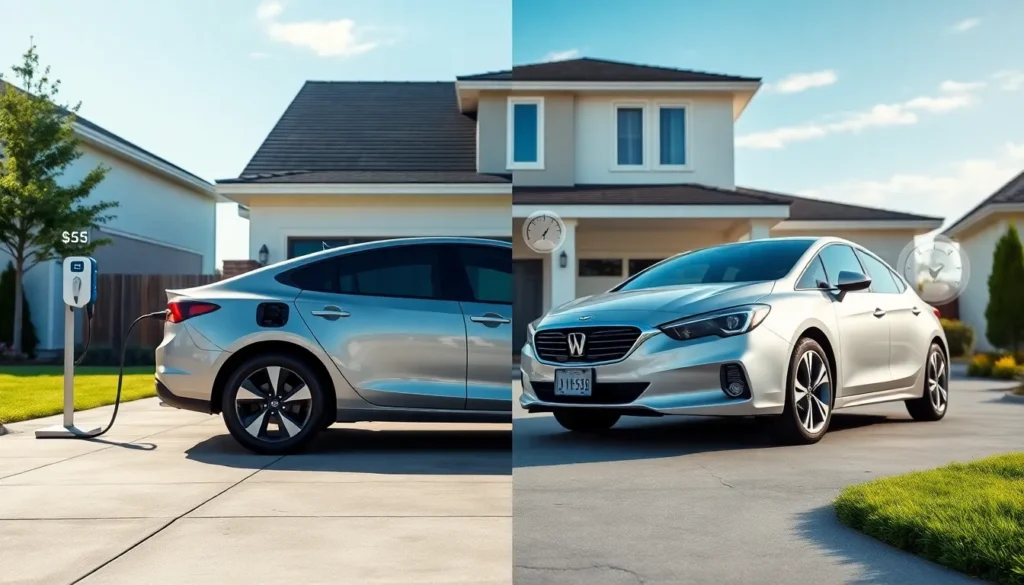
Electric vehicles vs gas cars, it’s one of the most common comparisons buyers make today. With rising fuel costs and growing environmental awareness, more drivers are questioning whether they should switch to an EV or stick with a traditional gasoline-powered car. Both options have clear advantages and drawbacks. Electric vehicles offer lower operating costs and zero tailpipe emissions. Gas cars provide familiar refueling convenience and lower upfront prices. This guide breaks down the key differences between electric vehicles vs gas cars across cost, environmental impact, performance, infrastructure, and maintenance. By the end, readers will have the information they need to make a confident decision.
Table of Contents
ToggleKey Takeaways
- Electric vehicles cost more upfront but can save thousands over five years through lower fuel and maintenance costs, plus federal tax credits up to $7,500.
- When comparing electric vehicles vs gas cars on emissions, EVs produce 50-70% fewer lifetime greenhouse gases even when accounting for power grid emissions.
- Electric motors deliver instant torque and a quieter ride, while most new EVs offer 250-350 miles per charge—plenty for daily driving needs.
- Home charging eliminates gas station trips entirely, letting EV owners wake up to a full battery every morning with a standard 240-volt outlet.
- Electric vehicles require significantly less maintenance—no oil changes, transmission services, or spark plugs—saving owners $300-$600 annually compared to gas cars.
- Modern EV batteries typically retain over 80% capacity after 200,000 miles and come with 8-year/100,000-mile manufacturer warranties.
Upfront Costs and Long-Term Savings
The sticker price of electric vehicles vs gas cars often surprises first-time EV shoppers. Electric vehicles typically cost more upfront. The average new EV in 2024 costs around $55,000, while the average gas car sits closer to $48,000. This gap exists mainly because of battery production costs.
But, the long-term savings picture looks different. Electric vehicles cost significantly less to fuel. Charging an EV at home costs roughly the equivalent of paying $1.50 per gallon for gas. Most American drivers spend $150 to $200 monthly on gasoline. EV owners often spend $50 to $70 on electricity for the same miles driven.
Federal tax credits also shift the math. The Inflation Reduction Act offers up to $7,500 in tax credits for qualifying new electric vehicles. Some states add their own incentives on top of that. A buyer in California, for instance, could save over $10,000 between federal and state programs.
Over a five-year ownership period, electric vehicles often cost less than comparable gas cars even though the higher purchase price. Lower fuel costs, reduced maintenance expenses, and available incentives add up. For buyers who can afford the initial investment, electric vehicles deliver real savings over time.
Environmental Impact and Emissions
Environmental concerns drive many buyers to consider electric vehicles vs gas cars. The difference in emissions is substantial.
Gas cars produce carbon dioxide directly from their tailpipes. The average gasoline vehicle emits about 4.6 metric tons of CO2 annually. Electric vehicles produce zero direct emissions while driving.
Critics point out that EVs still create emissions indirectly. Power plants generate electricity, and many still burn fossil fuels. This is true, but even accounting for grid emissions, electric vehicles produce fewer total greenhouse gases than gas cars in most regions. A 2023 study from the International Council on Clean Transportation found that EVs produce 50-70% fewer lifetime emissions than gas cars in the United States.
The picture improves as the grid gets cleaner. States with high renewable energy production see even greater environmental benefits from electric vehicles. In California or Washington, an EV’s lifetime emissions drop dramatically compared to the national average.
Battery production does require mining lithium, cobalt, and other materials. This creates environmental costs. But the overall lifecycle analysis still favors electric vehicles for carbon reduction. As battery recycling improves, this advantage will grow stronger.
Performance and Driving Experience
The driving experience of electric vehicles vs gas cars feels distinctly different. Many drivers find that difference refreshing.
Electric motors deliver instant torque. Press the accelerator in an EV, and the response is immediate. There’s no waiting for an engine to rev up or a transmission to shift. This makes electric vehicles feel quick and responsive, even in everyday driving. The Tesla Model 3, for example, accelerates from 0 to 60 mph in under 4 seconds in its Performance trim.
Gas cars offer their own advantages. V8 engines provide a sound and sensation that some drivers prefer. Manual transmissions give enthusiasts direct control. These experiences appeal to drivers who value traditional automotive character.
Electric vehicles run quietly. Some find this peaceful. Others miss the engine noise. Manufacturers have started adding artificial sounds to EVs at low speeds for pedestrian safety.
Handling differs too. Electric vehicles carry their heavy battery packs low in the chassis. This lowers the center of gravity and improves stability during turns. Many EVs feel planted and confident through corners.
Range anxiety remains a concern for some buyers. Most new electric vehicles offer 250-350 miles per charge. Gas cars can travel 400+ miles on a tank. For daily commutes and typical errands, EV range is plenty. Long road trips require more planning with an electric vehicle.
Charging Infrastructure vs Gas Stations
Infrastructure availability shapes the electric vehicles vs gas cars decision for many buyers. The U.S. has about 150,000 gas stations. Refueling takes five minutes. Drivers rarely think about whether they can find fuel.
The EV charging network is growing but remains smaller. The country has roughly 60,000 public charging stations with over 160,000 individual charging ports. That number increases monthly as companies like Tesla, Electrify America, and ChargePoint expand their networks.
Charging speed varies. Level 2 chargers, common at workplaces and public lots, add 20-30 miles of range per hour. DC fast chargers can add 200+ miles in 30 minutes. Tesla Superchargers and newer CCS stations make road trips practical for EV owners.
Home charging changes the calculation. Most EV owners charge overnight at home. They wake up with a full battery every morning. This convenience eliminates gas station trips entirely for drivers with home charging access. A standard 240-volt outlet provides a full charge overnight for most electric vehicles.
Apartment dwellers and those without dedicated parking face bigger challenges. Relying solely on public charging adds inconvenience. This infrastructure gap affects electric vehicles vs gas cars decisions for urban renters especially.
Maintenance and Reliability Differences
Maintenance costs reveal another advantage for electric vehicles vs gas cars. Electric vehicles have fewer moving parts. No oil changes. No transmission fluid. No spark plugs or timing belts.
Gas cars require regular maintenance. Oil changes every 5,000 to 7,500 miles cost $40 to $100 each. Transmission services run $150 to $300. Spark plugs, air filters, and other components add up over time. The average gas car owner spends $1,200 to $1,500 annually on maintenance and repairs.
Electric vehicle maintenance focuses on tires, brakes, and cabin air filters. Regenerative braking reduces brake pad wear significantly, EV brake pads often last twice as long as those on gas cars. Annual maintenance costs for electric vehicles typically run $600 to $900.
Battery longevity concerns some buyers. Modern EV batteries last longer than many expect. Most manufacturers warranty batteries for 8 years or 100,000 miles. Data from real-world usage shows most batteries retain 80%+ capacity after 200,000 miles. Battery replacement costs have also dropped as technology improves.
Reliability data is still developing for electric vehicles. Gas cars have decades of reliability records. EVs have shown strong early results, but the sample size is smaller. Tesla and other manufacturers have faced some quality issues, though these vary by model and year.


